
The Extraordinary Light of San Francisco and What It Means for Your Wedding Photographs
Are We Just California Dreamin?
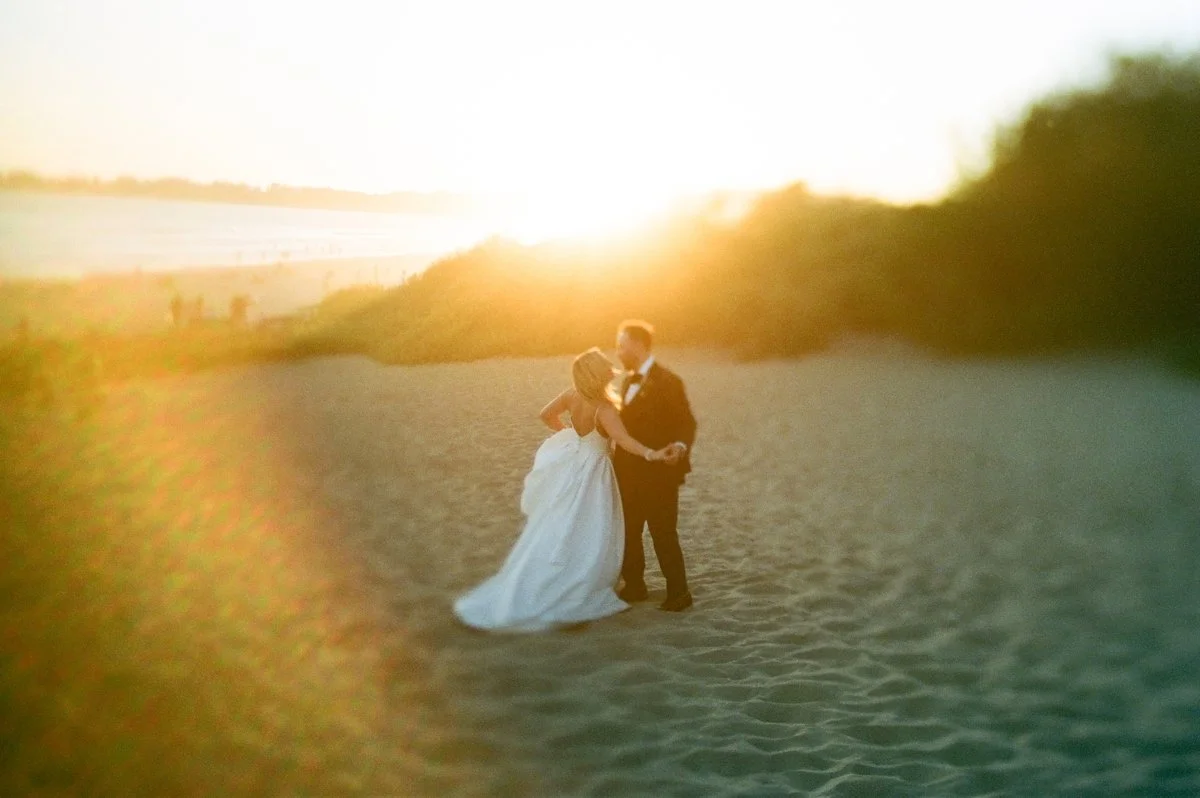
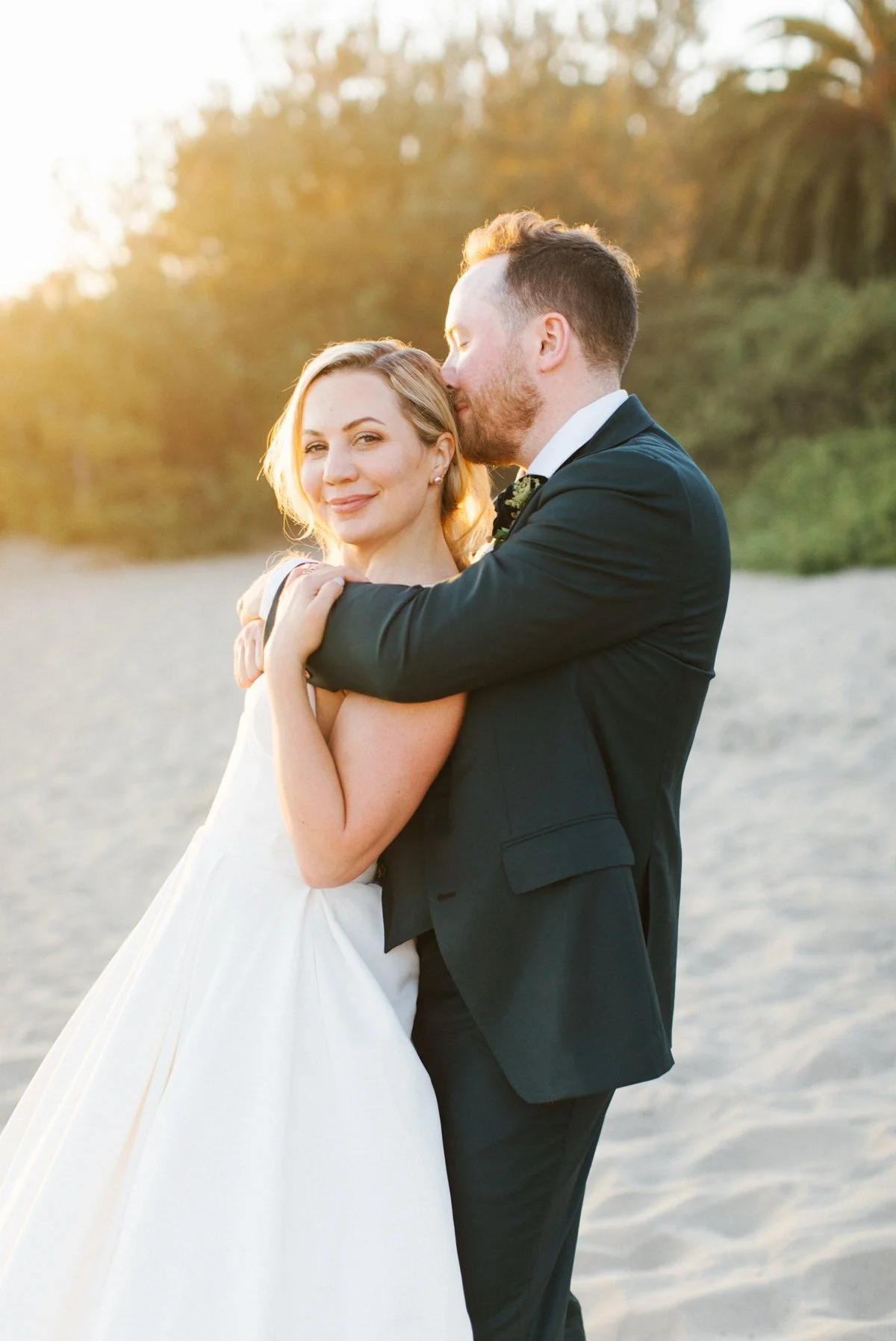
Golden rays of sunset at Stinson Beach from a Willow Camp wedding, north of San Francisco.
Last summer I traveled to Greece for an incredible photography workshop alongside wedding professionals from across the United States. At some point during our time together, while we were gazing out over the sparkling deep blue Aegean Sea, several of them commented on the beautiful California sun and how its light is just different on the west coast.
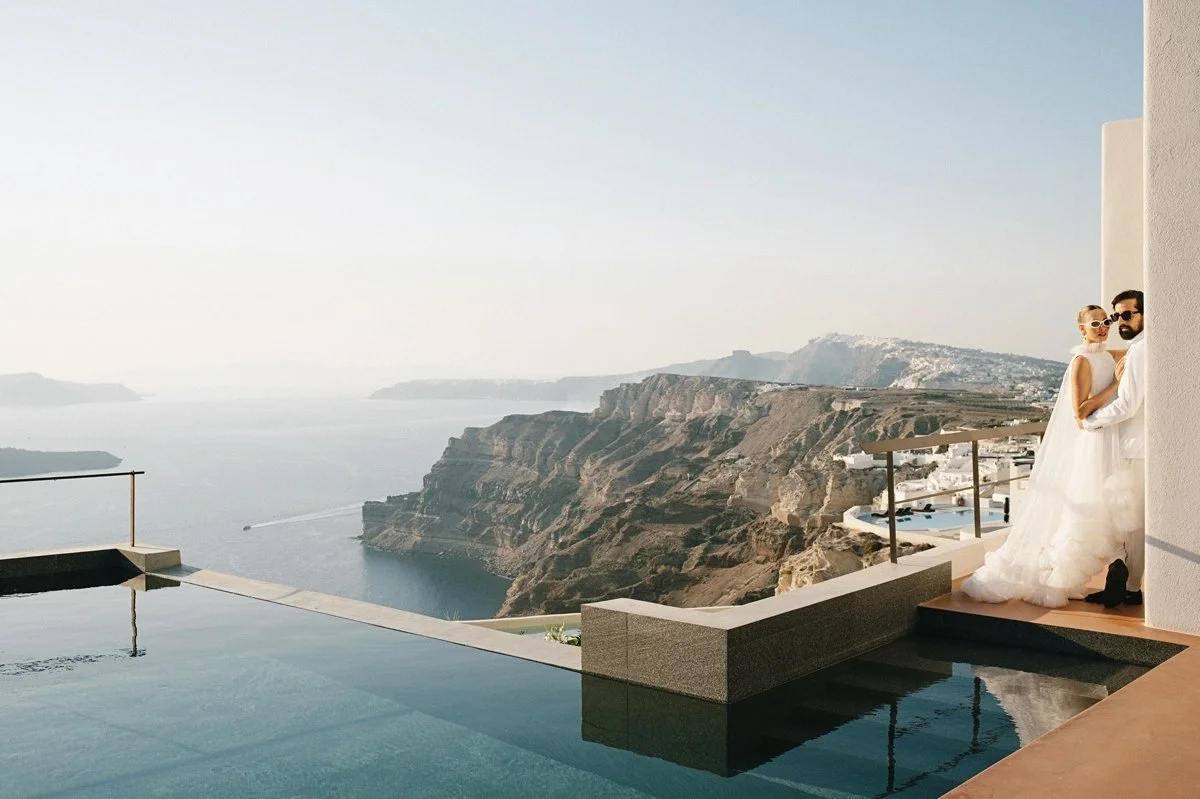
From my summer workshop in Santorini
Since I grew up in the Bay Area, I never thought about it being something remarkable. My Greece workshop colleagues pointed out something that I suddenly wondered if I had taken for granted. I have spent my entire career photographing weddings and engagement sessions here. The light outside my window, the way it filters through the morning marine layer or turns the east bay or wine country hills amber in the late afternoon, has always simply been my normal.
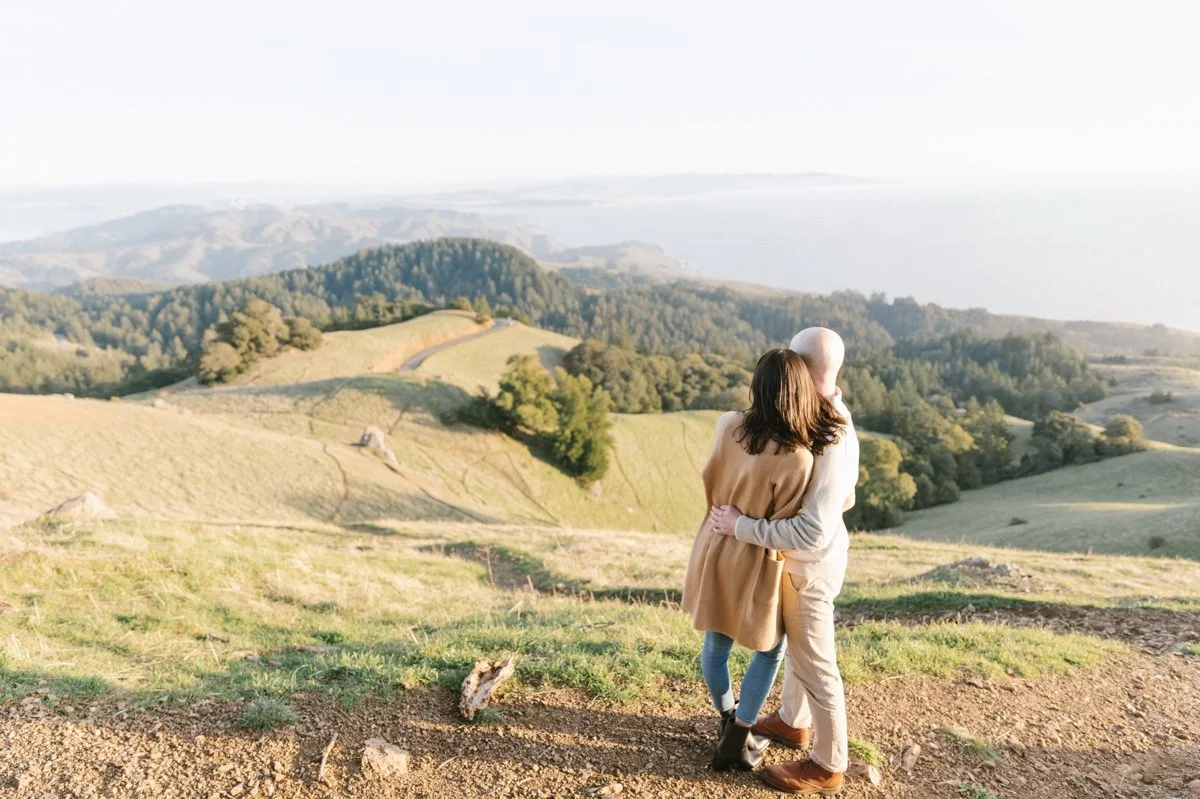
Views of the rolling hills and San Francisco Bay from the top of Mt. Tamalpais.
The Science of Why California Light Is Golden
The warmth of a California sunset is not mythology or marketing. There is real physics behind it, and it begins with where the sun sets.
On the west coast, the sun descends directly over the Pacific Ocean. As it drops toward the horizon, its light travels through a much greater thickness of atmosphere than it does at midday, stripping away the shorter wavelengths, the blues and violets, and leaving only the reds, oranges, and golds. The ocean surface then introduces moisture and sea salt particles that diffuse and concentrate what remains, deepening the warmth even further. The result is a golden hour that is measurably more golden than what most of the country experiences.
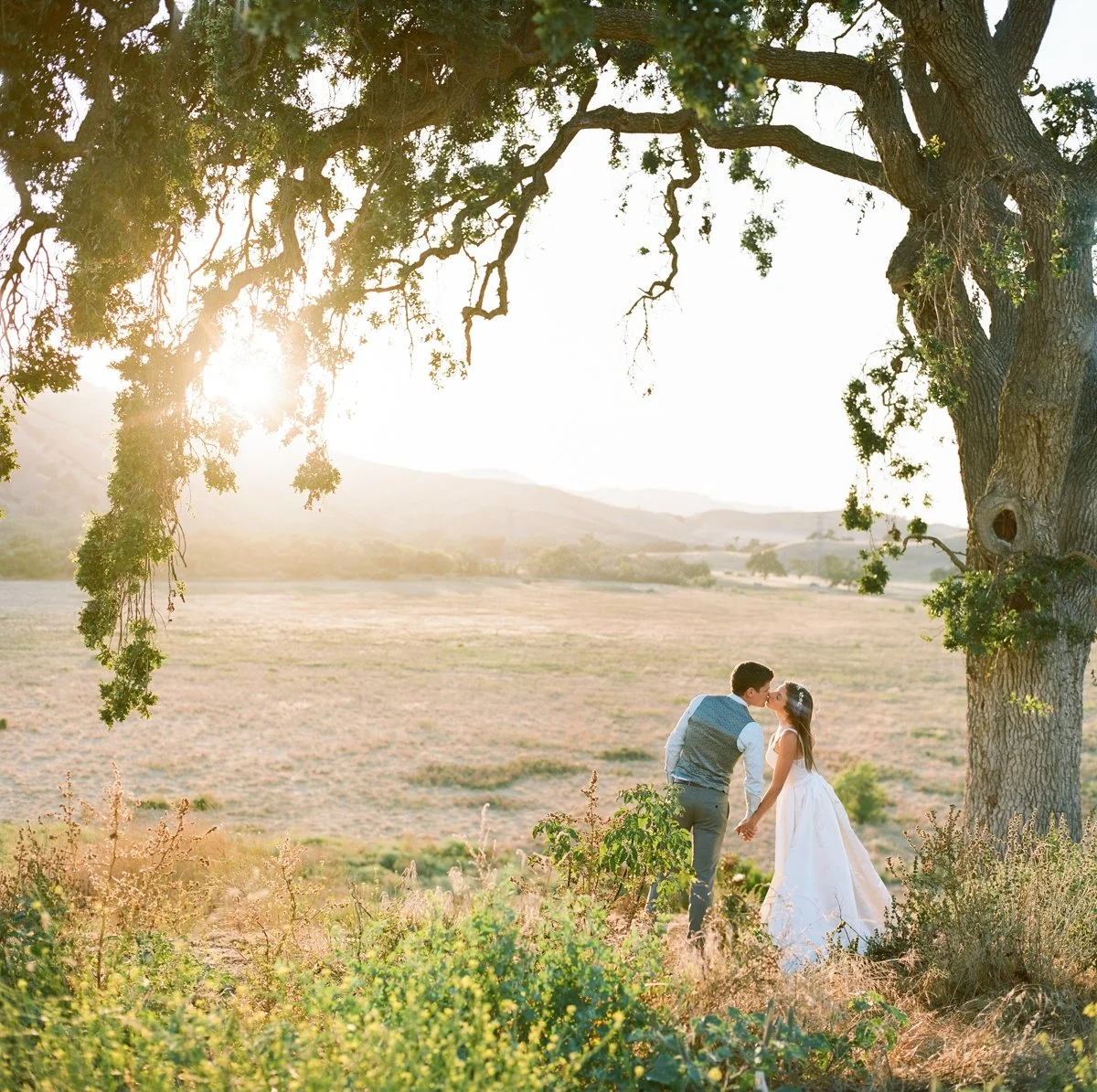
California, keepin’ golden!
For couples, that difference is immediately visible. The light wraps around a subject rather than flattening it. Shadows are long but not harsh. Skin tones glow. And in the San Francisco Bay Area, that window tends to be longer and more vivid than almost anywhere else.
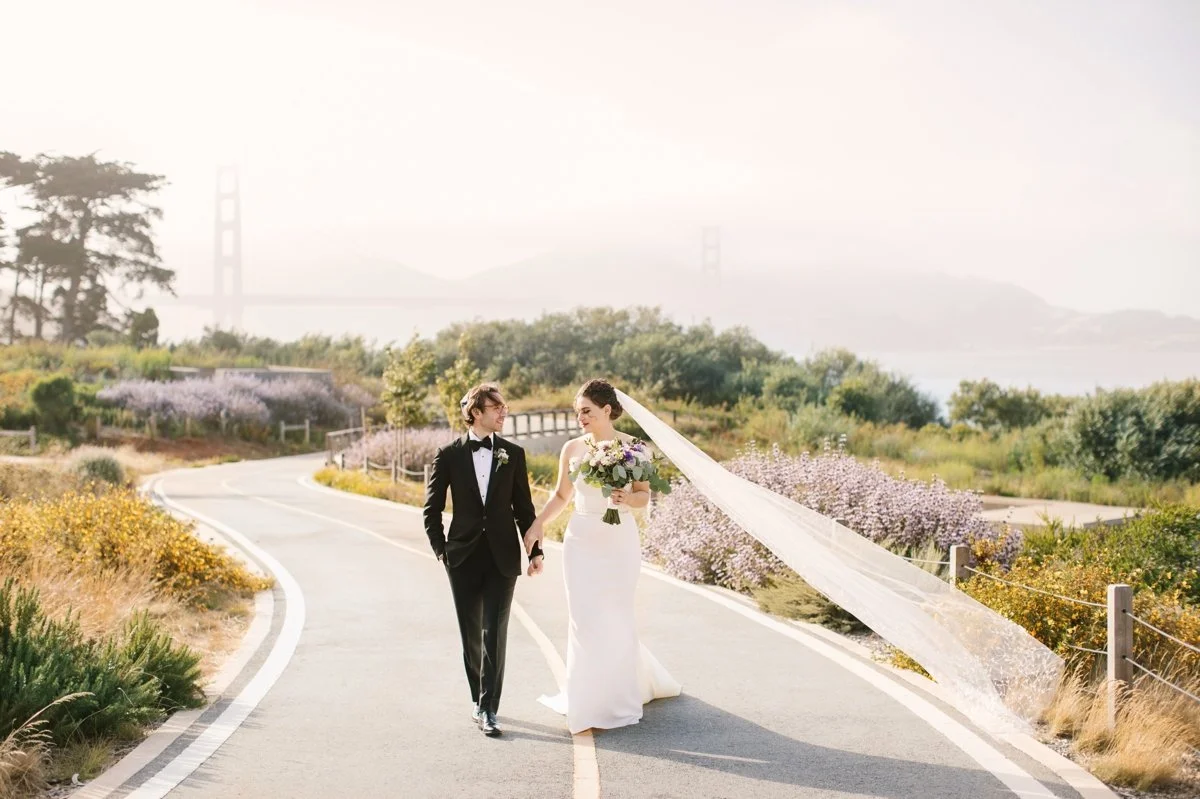
A barely visible Golden Gate Bridge from a Presidio wedding.
Fun Fact: In 1846, U.S. Army Captain John C. Frémont named the harbor entrance Chrysopylae, Greek for Golden Gate, because the sunset light reminded him of the Golden Horn harbor in Istanbul. 91 years later, the bridge that now bears that name would be built.
Karl, the Marine Layer, and the Gift of Diffusion
If golden hour is the most celebrated light in photography, the marine layer is the most misunderstood.
San Francisco's fog has a name. Karl arrived on Twitter in 2010, an anonymous account inspired by the misunderstood giant in the film Big Fish, and has since accumulated hundreds of thousands of followers. Locals have always had a complicated relationship with Karl, equal parts affection and exasperation. As a photographer, I have come to think of him as one of my most reliable collaborators.
Karl is a mass of cool, dense ocean air pushed inland from the Pacific through the Golden Gate, the largest coastal gap in the mountain ranges that line the California coast. The cold California current, which flows southward from Alaska along our coast, chills the ocean surface. When warm inland air meets that cold water, moisture condenses into the low-lying cloud cover we know as the marine layer. In summer, as inland temperatures in the Central Valley climb past 100 degrees, the pressure difference between coast and interior pulls Karl in almost daily.
What Karl does to light is extraordinary. The marine layer scatters incoming light in every direction, eliminating the harsh shadows and blown-out highlights that direct sun produces. On a morning when Karl has settled in, the light becomes even, cool, and luminous. Details in a lace veil that would disappear in direct sunlight become visible. The texture of a suit jacket, the line of a jaw, the way two people lean into each other, all of it reads with a clarity and softness that bright midday sun simply cannot produce.
There is a reason Alfred Hitchcock chose San Francisco fog as the psychological backdrop for his film Vertigo! It does something to the visual world that clear skies cannot replicate.
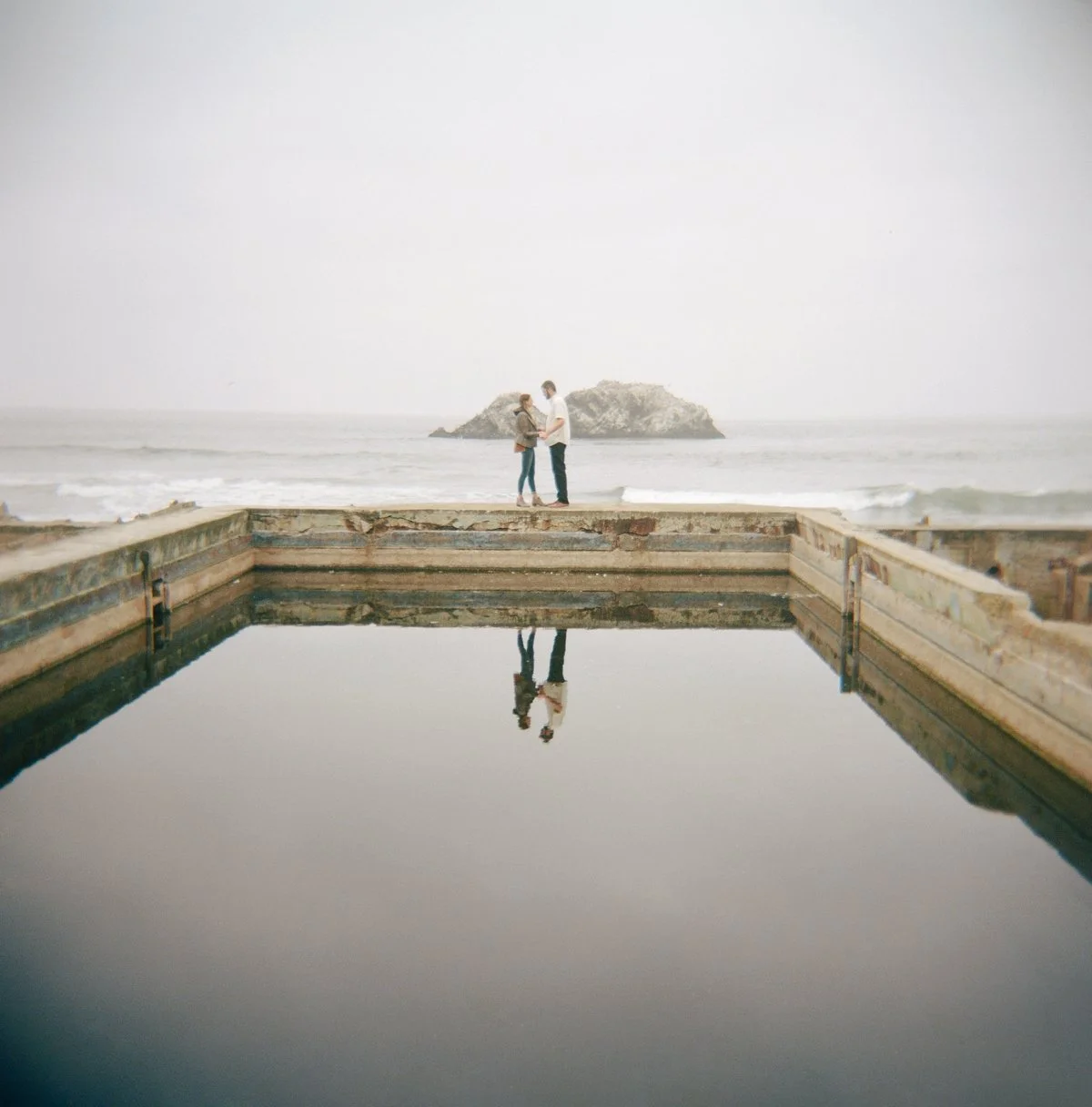
A Karl-the-Fog kind of day at San Francisco’s Sutro Baths.
A City of Many Lights
San Francisco does not have one kind of light. It has dozens.
The city sits on a narrow peninsula surrounded by water on three sides, divided by nearly fifty hills that redirect air, fog, and sun in ways that shift dramatically from one neighborhood to the next. There is an app, Mr. Chilly, built specifically to show residents the weather in their own neighborhood, because what is happening six blocks away may be entirely different from what is happening outside their door. San Francisco is considered one of the most microclimate-dense cities in the world, and that distinction has a direct effect on every photograph made here.
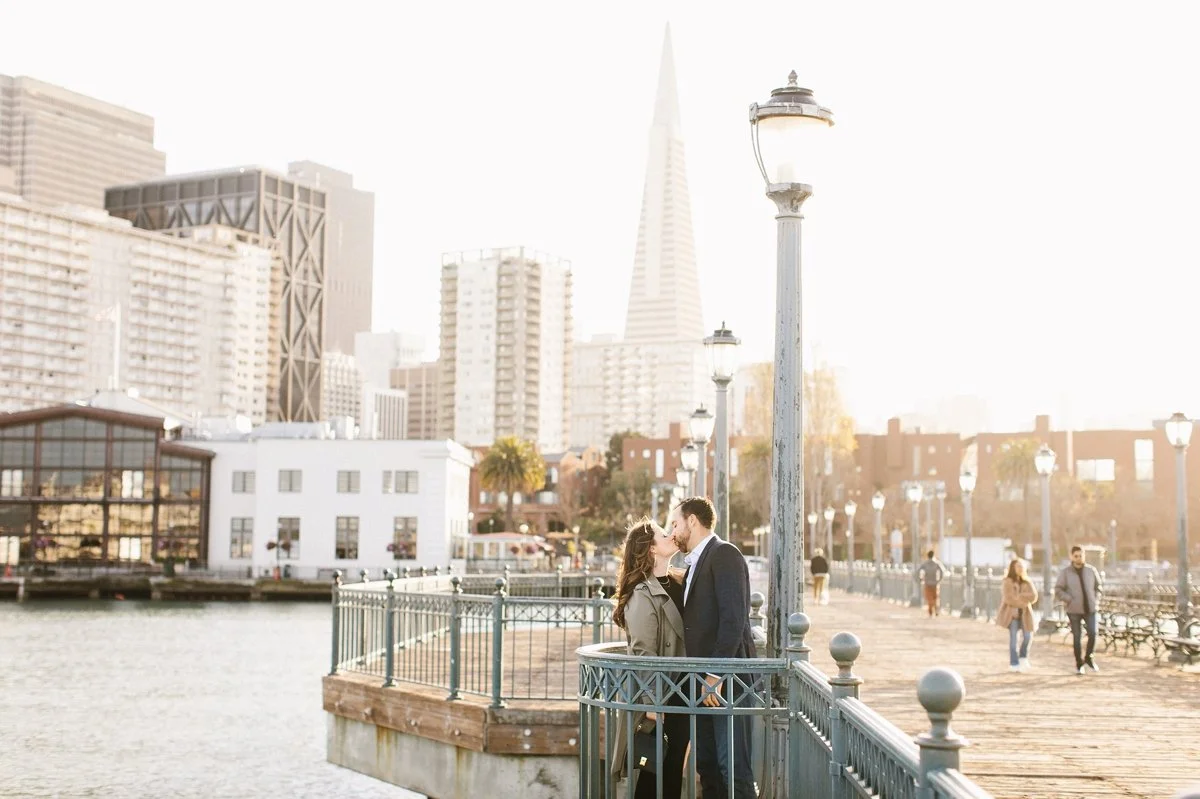
A great mix of golden sun and the hazy marine layer along the Embarcadero waterfront.
It is one of the reasons I plan each session the way I do. The same date and time of day can produce completely different light depending on where we are in the city, and knowing how to read that is something that comes only from years spent working within it. I’m also flexible. If it’s a super heavy fog day and my couple was hoping for some golden rays at their engagement session, then we can change the date.
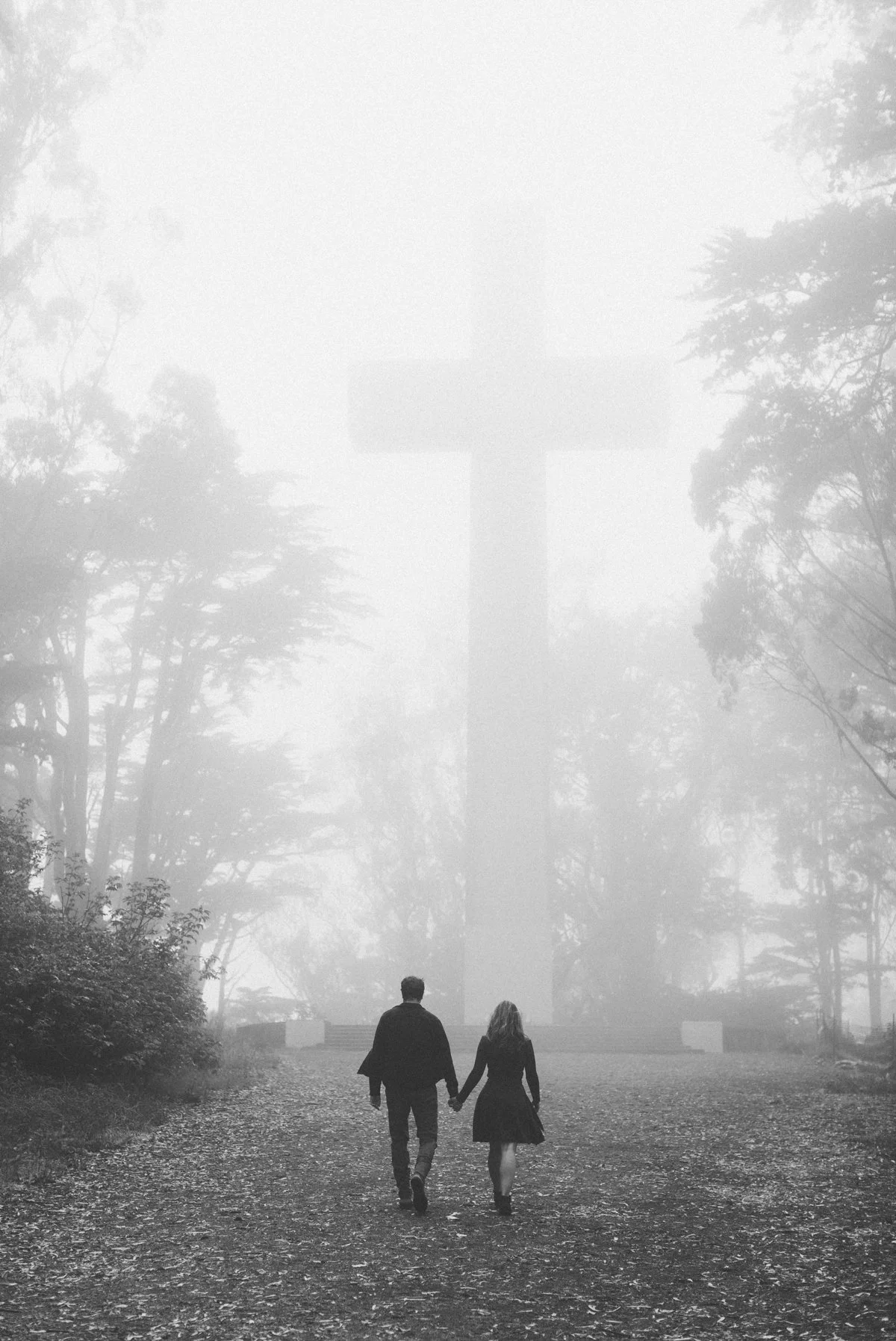
A foggy day at Mount Davidson giving a moody vibe.
Three Locations, Three Kinds of Light Lands End sits at the northwestern edge of the city, where the land meets the strait. It faces the Pacific directly and feels it completely. Karl arrives here first and lingers longest. In the morning, the marine layer creates a diffused, silvery quality that gives images a painterly softness. By late afternoon, if Karl has pulled back, Lands End catches some of the most dramatic directional golden hour light in the city, with the ruins of the Sutro Baths and the headlands across the water serving as natural backdrops.
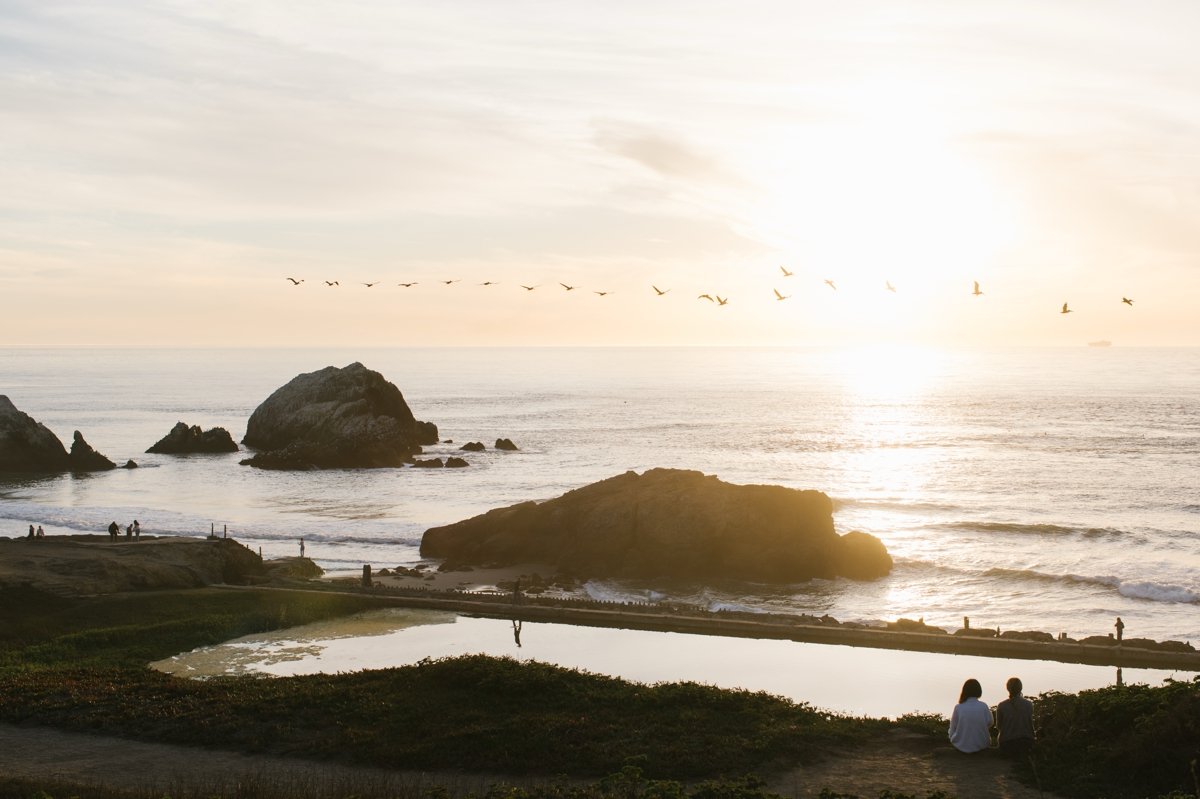
Lands End, looking out to the Pacific at Golden Hour.
The Marin Headlands, across the bridge, sit above the fog line. On days when Karl fills the basin below, the Headlands offer the extraordinary sight of the bridge towers rising from a sea of white, with the city floating somewhere beneath. The light at elevation is cleaner and more open, producing images with a completely different character than anything possible within the city. For couples who want to feel like they are standing at the edge of the world, the Headlands are where I bring them.
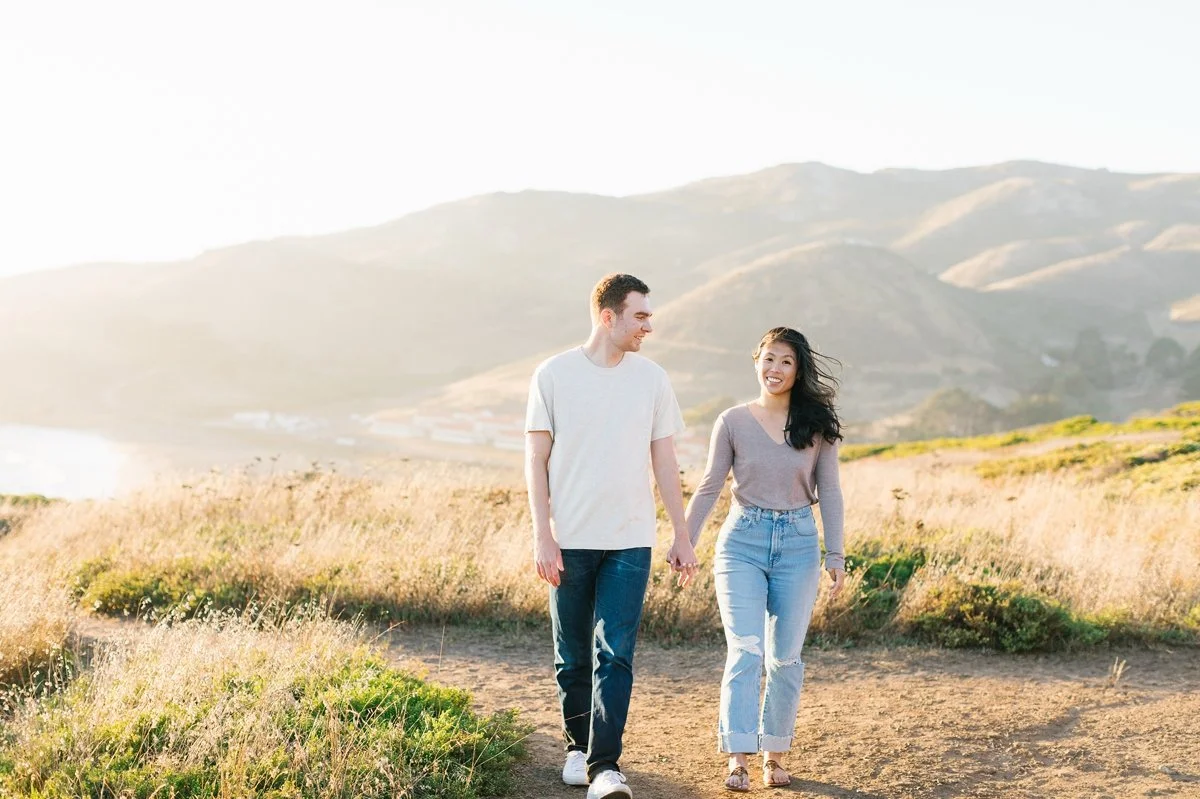
The Marin Headlands above Rodeo Beach
The Presidio gives me something else entirely: mature tree canopy, filtered afternoon light, and the architectural backdrop of its historic military buildings. Light moves through the eucalyptus and cypress in long, warm shafts that create a natural framing no artificial light can duplicate. The mood here is closer to a European park than a coastal overlook, and the images reflect that.
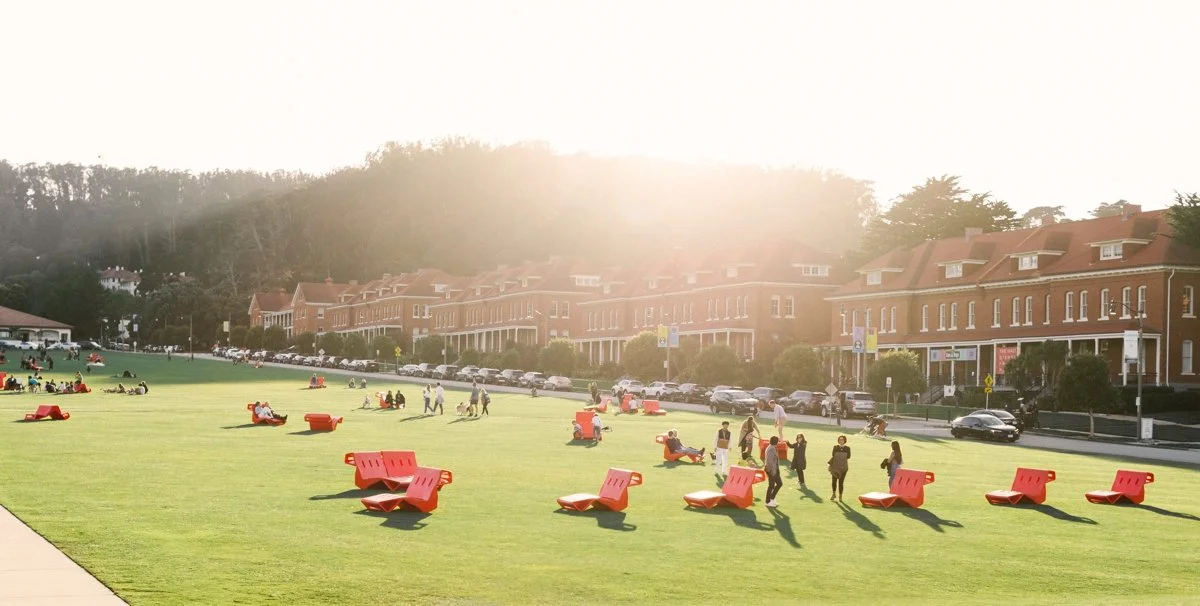
The Presidio lawn
What This Means for Your Wedding Day Every couple I work with gets a different version of San Francisco light depending on when and where we are together. A winter engagement session in the Presidio in the afternoon catches a sun that sits lower in the sky, creating a quality of light that is almost European in its warmth. A summer morning at Lands End with Karl still present produces images that look like they were made through gauze.
Neither is better. They are different stories told by the same city.
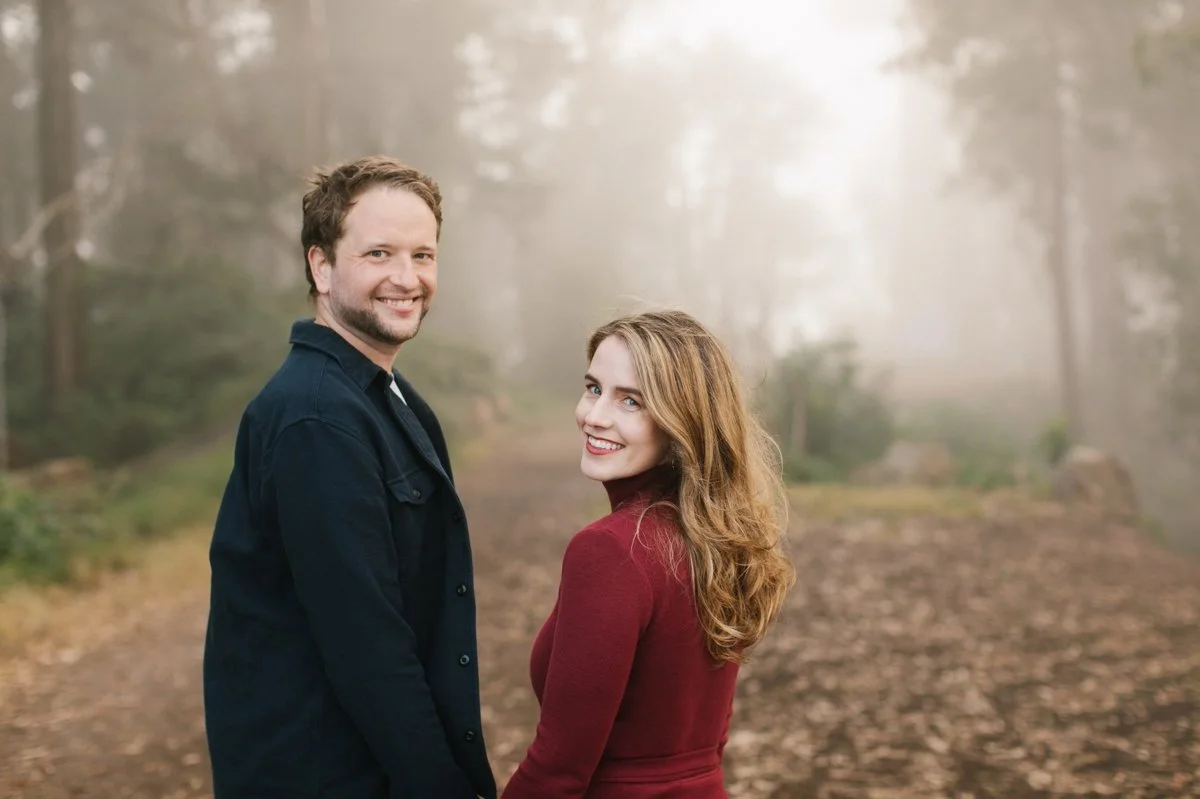
The ethereal glow from a foggy Mount Davidson.
The light in San Francisco is rarely neutral. It has a mood, a direction, a temperature. Karl either cooperates or he does not, and either way he changes what is possible. The marine layer that a couple worries about on their wedding morning is the same marine layer that wraps them in soft, flattering light and makes their photographs look unlike anything a midday summer sun could produce.
My fellow wedding professional friends from the Greece workshop were right. The California sun is different. It has been shaped by ocean currents that travel from Alaska, by a geography that funnels marine air through a single magnificent gap in the coastal mountains, by fifty hills that redirect everything and create a dozen worlds within four square miles.
If you are planning an engagement session or a wedding in San Francisco, in the Marin Headlands, or anywhere across the Bay Area, the light is part of what I am thinking about from the moment we begin talking. The light and weather is always part of the conversation, and in San Francisco, it is one worth having.
You can find Sonya here if you’d like to nerd out with her about California light and the San Francisco Bay Area.
Thanks to The Lifestyle Historian for your collaboration on this post!